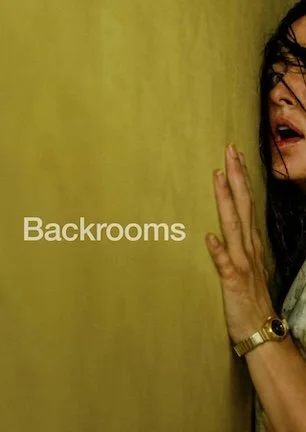
Studio: A24
Director: Kane Parsons
Writer: Will Soodik
Producer: James Wan, Michael Clear, Roberto Patino, Shawn Levy, Dan Cohen, Dan Levine, Osgood Perkins, Chris Ferguson, Peter Chernin, Jenno Topping, Kori Adelson
Stars: Chiwetel Ejiofor, Renate Reinsve, Mark Duplass, Finn Bennett, Lukita Maxwell, Avan Jogia, Robert Bobroczkyi
Review Score:
Summary:
In search of a missing patient, a therapist experiences a surreal mystery inside a liminal space hidden beyond reality.
Review:
At the time of its theatrical release, a conspiracy theory made some noise by suggesting Kane Parsons didn’t really direct the “Backrooms” feature film adapted from his YouTube content. This claim wasn’t based on any factual evidence or firsthand accounts, just a suspicion that A24 could not conceivably give an underexperienced 20-year-old free reign to make a ten-million-dollar movie without a heap of heavy-handed oversight.
Perhaps there’s a puff of smoke in the fact that the film has ten producers, including big horror names James Wan and Osgood Perkins, though this unfounded theory eventually evaporated as ageist conjecture. I’m only recounting it because age-based perspectives might still influence how viewers filter “Backrooms” on an individual basis, just not in a way that disrespectfully dismisses the director based on his youth.
The Backrooms concept began in 2019 as a single photograph of an unfurnished room in an empty commercial complex. It was posted anonymously to a creepypasta forum as an example of an image that felt inexplicably unnerving. Multiple people developed fiction to build weird worlds and strange settings lurking within these walls and around concealed corners. But it was a series of viral shorts started by Kane Parsons in 2022 that made the Backrooms break out as a backdrop for horror set in liminal spaces where people encounter eeriness and odd déjà vu outside the blurred boundaries of reality.
It’s interesting to me that the Backrooms became a phenomenon of fright among millennials and pre-teens, although it’s not unexpected considering the lore grew popular through the most modern means of how that demographic acquires entertainment. I’m too far removed from their mindset to accurately gauge what they find scary about the “Backrooms” film. As someone more than twice their age and a reformed office drone to boot, the image of a jaundice-colored room baking under the humming heat of fluorescent lights evokes the touchstone terror of mindlessly toiling through a soul-sucking job. I’m only explaining my POV, not gatekeeping, but post-9/11 babies who’ve only ever worked from home fortunately don’t know that horror, so “Backrooms” presumably encompasses a different idea for them.
For the white and blue collars who’ve regularly commuted to a rectangular corporate building intentionally designed with no distinguishable personality, “Backrooms” brings out the buried dread of being unconsciously trapped in an oppressive environment that slowly melts a mind into compliant complacency. Maybe they even remember long overtime hours, surrounded by a sad maze of abandoned cubicles, feeling alone enough to break through the fugue to wonder, “What am I doing here?”
“Backrooms” begins with a voiceover from Dr. Mary Kline, one of the movie’s two main characters. She calmly intones, “We all have our loops, our habits, behaviors that keep us walking in circles, reaching for the same solutions over and over again, thinking each time, they’ll take us somewhere new. But they don’t. And still, it’s the neural pathway of least resistance. A path you made. It’s the one that kept you safe as a child … And now, as an adult, you’re still stuck right where you started.” With an opening declaration this loud, one could hardly accuse Will Soodik’s script of hiding its horror in a metaphor about being chewed up by the rut of routine.
Mary’s current patient, the movie’s other main character, is Clark. Struggling with a contentious divorce and in denial about the alcohol abuse that helped him lose his wife, Clark runs a failing furniture store. It’s the kind of business that puts him in a pegleg and pirate costume for a shabby commercial recorded on video by his assistant manager Kat and her boyfriend Bobby. Unopened bills pile up on his desk. He drives a boxy sedan. Nights are spent sleeping on a showroom bed in his store while “Santa Claus Conquers the Martians” flickers on a tube TV. Clark’s life, in two words, is pitiably average.
Mary’s everyday activities are equally mundane. She watches the same public domain movie while eating her reheated dinner for one off a TV tray. Still processing past trauma inflicted by a mentally unstable mother, and coming to terms with the demolition of the childhood home where she experienced that pain, Mary distractedly drinks wine at a dinner where she stares contemplatively at a different mother and daughter interacting. Like Clark, hers is an underwhelmingly ordinary existence.
Things grow significantly less ordinary when unusual electrical activity leads Clark to discover a mysterious, invisible portal in his store’s basement wall. Passing through the portal transports Clark into an otherworldly space that resembles the abandoned office described earlier, but built with bizarre angles that would make Sarah Winchester green with envy. Oddly piled pieces of furniture partially sink into the floor. Labyrinthine corridors lead into rooms echoing M.C. Escher’s erratic sense of direction and dimension. Initially appearing harmless, these Backrooms hide unknown entities bent on consuming wayward wanderers, and Clark’s fascination with these findings gradually draws Kat, Bobby, and then Mary into a dreamscape of unsettling uncertainty.
Until the last act, “Backrooms” doesn’t put its monsters or murders, all of which are few in quantity, out in the open. In keeping with the askew atmosphere where the movie takes place, disturbing sensations stay unspoken and unseen. Being cerebral with its suggestive nature is what makes the slow-burn drama intriguing to minds immersed in the movie’s mood yet concurrently confounding to those who aren’t swallowed up in its subtleties.
Running 110 minutes, the inherent limitations of a liminal space psycho-thriller can drag the movie into monotony no matter how well one takes to the film’s surreal fantasy. Along similar lines, creative set design and clever camera movements can only go so far to counter a cryptic mystery whose lingering questions will have more than a few frustrated fingers searching for “ending explained” answers after end credits roll.
Not to add fuel to a fire that’s already been extinguished, but it seems unusual for a freshman filmmaker to be this tuned in to a mature theme that resonates as a reflection of suffocating in a cyclical pattern that’s imperceptibly inescapable. Maybe that merely speaks to Kane Parsons’s exceptional ability for handling such material, or maybe my interpretation of “Backrooms” as a working-class nightmare wasn’t ever included in Parsons’s original intent. Maybe “Backrooms” signifies something completely different to the YouTube generation that made it a sensation in the first place, though you’d have to ask them for an alternate take on its meaning, if they weren’t lulled into listlessness by its low speed and deliberate dearth of action.
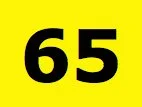
Review Score: 65
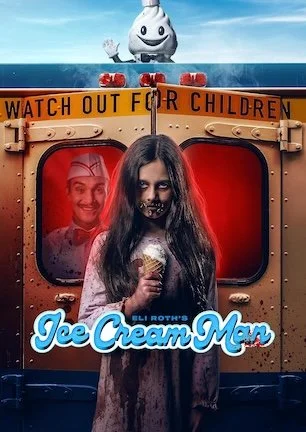

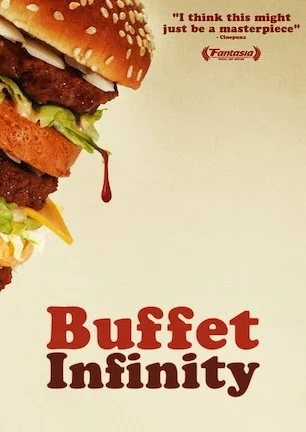
You immediately know you’re in for a wild ride through nostalgia and nightmares like only Casper Kelly can conjure.