Studio: Shudder
Director: Hanna Bergholm
Writer: Ilja Rautsi, Hanna Bergholm
Producer: Daniel Kuitunen, Noemie Devide
Stars: Seidi Haarla, Rupert Grint, Pamela Tola, Pirkko Saisio, Rebecca Lacey, John Thomson
Review Score:
Summary:
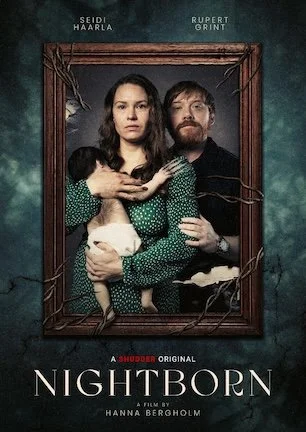
Trying to start a family in a remote house deep in a strange Finnish forest, an unsettled mother begins to suspect her newborn child might not be normal.
Review:
Right out of the chute, “Nightborn” checks to make sure viewers chose the right road to ride. Finnish actress Seidi Haarla and English actor Rupert Grint smile at each other, then soak in the sights out the window as their car coasts down an unpaved woodland path. Those countryside sights consist of moss-covered stumps and dense copses of trees in every direction of the Lithuanian forest where the film was shot. Plucked cellos and softly sobbing violins simmer on the soundtrack as the couple, Saga and Jon, pulls up to a rundown house tucked too far away for anyone else to randomly find it. These telltale signs confirm the audience has arrived deep in the heart of arthouse folk horror. If this is not the desired destination, turn around now, before the partially subtitled scenes start.
Abandoning life in London, Saga and Jon have decided to raise a family in the remote home that previously belonged to Saga’s grandmother. They have a major renovation project ahead of them, as the dilapidated house’s old wooden floors are rotting so badly, there’s a tree growing right in the middle of the room they plan to turn into a nursery.
They don’t have a baby yet. That will come after Saga and Jon have spontaneous sex beneath some branches suspiciously twisted into humanlike shapes, almost as if these trees were, or are, alive.
“Nightborn” loudly announces a nine-month leap in its timeline by suddenly cutting to a catch-you-off-guard shot of a crowning head bursting from the birth canal to spatter Jon’s stunned face with blood. From the alarmed reactions of attending nurses who refuse to say anything, Saga fears the worst. Once she recovers, Saga doesn’t receive any immediate reassurance from her husband. Grint puts in a perfect portrayal of a father who isn’t quite sure how to handle the question when his wife asks, “Is he ok?” After a pause, Jon whispers, “yeah” with wide eyes and nearly no inflection. His reluctantly acquiescing “okay” sounds just as uncertain when Saga asks to see their son.
Jon isn’t the only one with an interest in keeping some curtains closed. “Nightborn” director Hanna Bergholm and cinematographer Pietari Peltola put their heads together to create terrific blocking that keeps secrets concealed. Throughout the movie, the camera deliberately doesn’t show too much of the baby’s appearance or its development, yet not with unfairly deceitful cheats. The camera just chooses angles where putting the child in silhouette makes sense for an eerie effect, or leaves the infant unseen so eager eyes instinctively fight to peek around clusters of characters.
Yet we see enough of the boy, whom Saga comes to refer to as “it” even though an inexplicable urge inspires her to name him Kuura, to know he isn’t normal. Kuura is unusually hairy, has a tendency to growl in his sleep, constantly cries unless he’s in darkness, and, perhaps most disturbingly, bloodily bites his mother’s nipple whenever he breastfeeds. Once Jon’s mother mentions a local legend about trolls stealing children and some families supposedly still having troll blood in their veins, the picture becomes clearer that Saga’s growing fears may be tied tighter to terrifying folklore than to an irrational imagination.
Appearing on the surface as though it may only crib common bits from “Rosemary’s Baby” (review here), “Delivery: The Beast Within” (review here), and dozens of other horror movies involving problematic pregnancies, a hasty hand might dismiss “Nightborn” as another imitative effort about the nightmares of parenthood. There’s a little less universality in “Nightborn’s” specific themes though, meaning its horror isn’t intended to hit the same targets for fathers, couples considering kids, or singles with no current concerns about having a family. It’s not particularly interested in the traditional trappings of demonically possessed children either.
“Nightborn” lasers its focus on Saga’s postpartum perspective. Before Kuura becomes more beastly, what weighs most on Saga’s mind is how additional weight affects her body image, how her husband seems disinterested in physical intimacy, how she must mask her misery to entertain partygoers celebrating her baby, and how she should please a disapproving mother perpetually disappointed by Saga’s decisions. As she spirals deeper into depression and delirium, the movie’s metaphors tackle feeling unlike yourself, being resigned to unhappiness, and the stress of being unable to bond with a troubling newborn.
Scattered scares are still there. “Nightborn” isn’t too mired in its sympathy for Saga’s increasingly harrowing situation that it forgets to be frightful. Nothing tops the shock of the baby being born, but Saga’s soiled underwear, torn flesh from a finger, and deep bite wounds on Saga’s body accent cerebral suspense with visual chills. Macabre moments aren’t meant to elicit repulsive reactions. They’re meant to draw viewers back into Saga’s tumultuous journey when atmosphere alone can’t continue carrying the movie.
The usual rules for slow-burn dramas apply. If Finnish folk horror steeped deep in allegories for motherhood aren’t of individual interest, “Nightborn’s” smoldering style might not fan a hot enough flame. Even if this is an appealing cup of tea, it’s not easy-to-drink Earl Grey. “Nightborn” has a more targeted taste of root vegetables and earthy herbs with hints of exotic fruit. Like the imaginary drink it mixes, the movie is something to sip patiently out of a porcelain cup, not 64 ounces of soda to gulp down with popcorn spilling out of an overpriced novelty bucket.
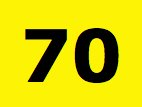
Review Score: 70




The end credits song lands one last thud to reinforces the impression of a film that wants to be badass when it’s really just a loud lump of noise.